Generative AI is quickly becoming ubiquitous in teaching and research, but many educators and postgraduate students have had little formal guidance on how to use it ethically and effectively. I was honored to be invited to offer this workshop to the English Club of the Faculty of Liberal Arts at Prince of Songkla University. The audience was mostly postgraduate students and faculty.
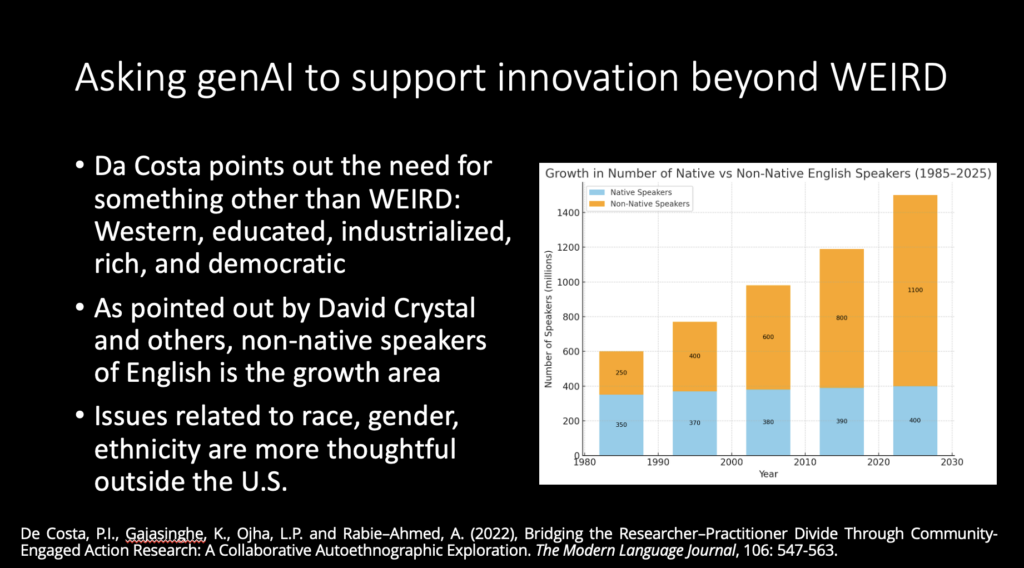
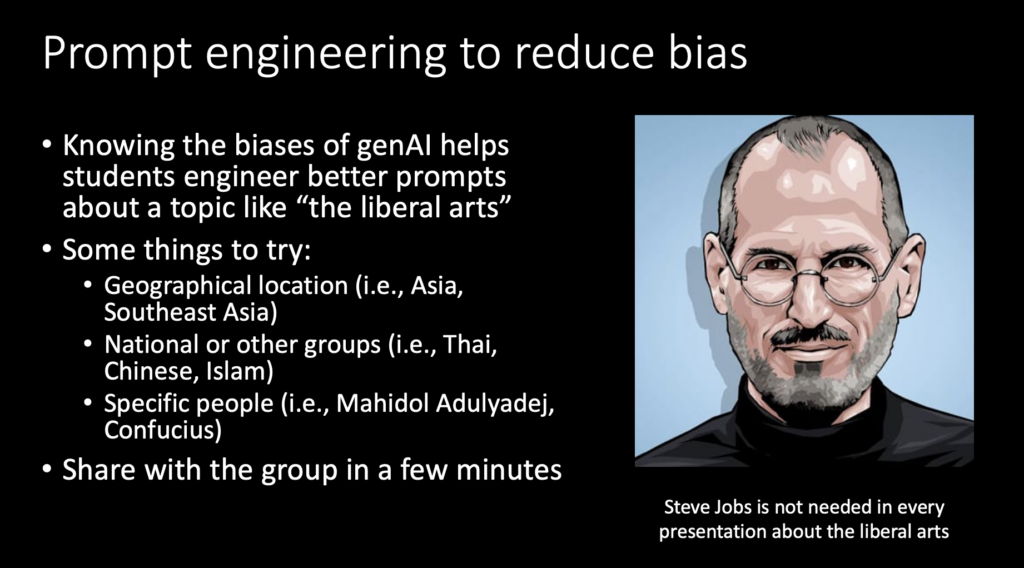
I have been concerned that genAI output often leads to thinking that is irrelevant to English language professionals in the global South and global East. We talked about this bias, and then participants examined it in research topics of their own interest.
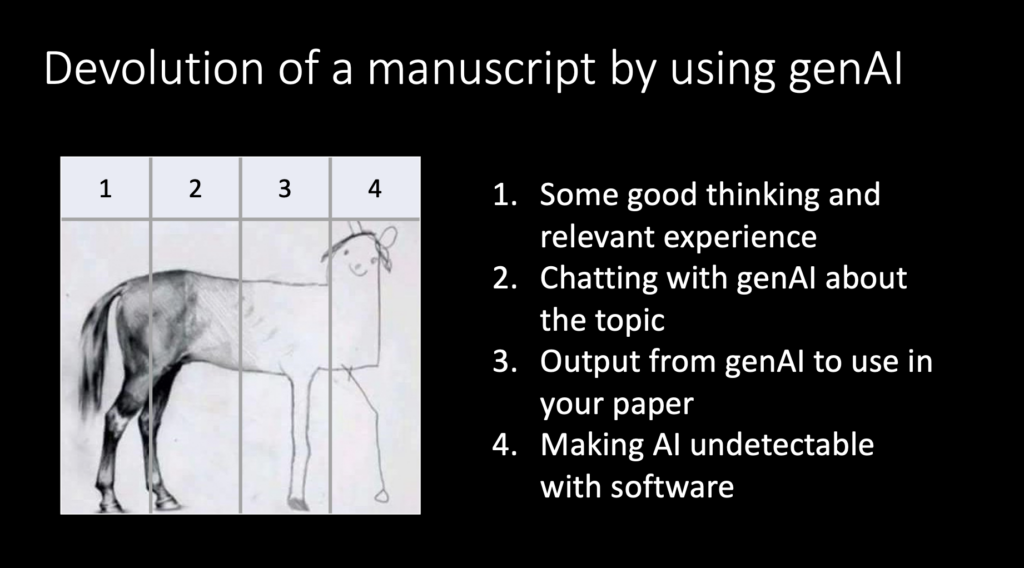
After the discussion of bias, I briefly mentioned the consequence of copying and pasting genAI output into manuscripts: desk rejections or article retractions. However, the main goal was not to scare everyone, but to show how genAI is best used as a conversation partner and research assistant. In addition to showing genAI’s helpful (and sometimes unhelpful) assessment of my own manuscripts, I also provided an example of using genAI to do text mining on a corpus by creating Python scripts.
The main takeaway was that effective prompt design is not about finding the perfect words to get an answer right way. Instead, we need to learn how to evaluate the output and ask follow-up questions that meet our needs and experience. In this way, we can keep human judgment at the center of research and teaching.
As was my intention, the hands-on exercises led to an interesting and informative discussion. I look forward to the next invitation from this group.
Sample Slides