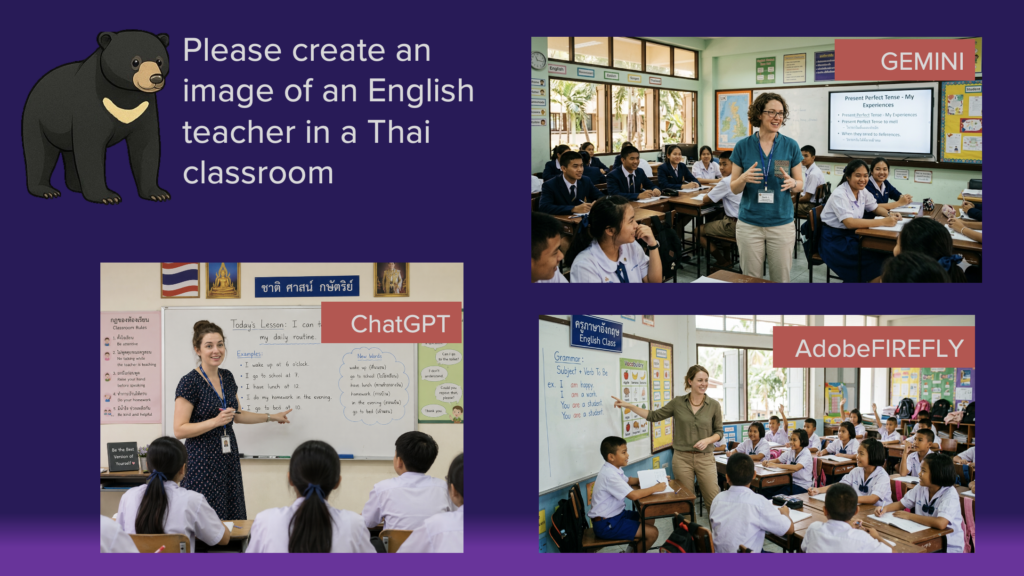
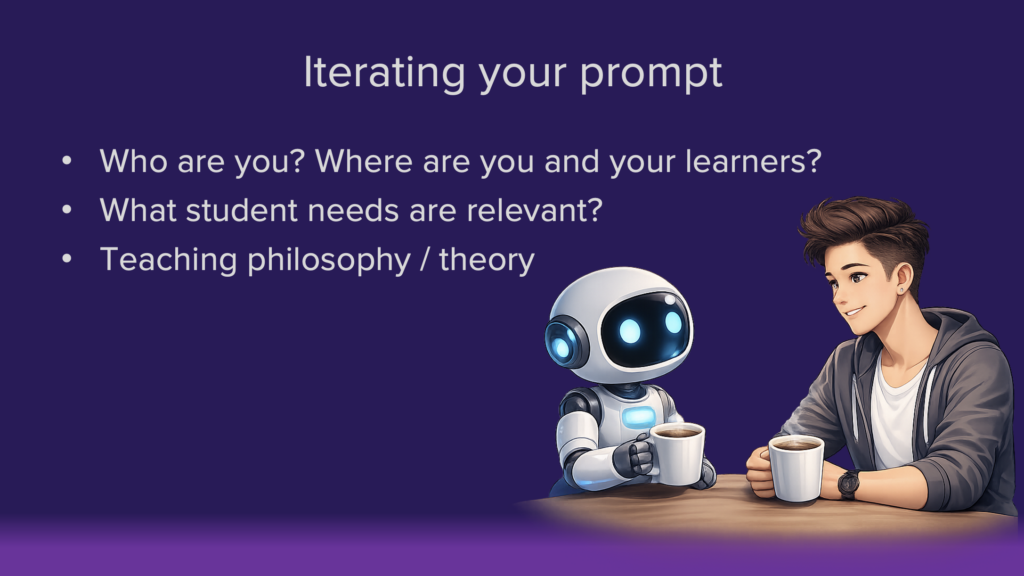
Generative AI is already changing how students write, read, translate, and search for information. For teachers, the challenge is not simply whether to allow or ban AI, but how to design learning experiences that keep students thinking.
I offered a one-day, hands-on training program primarily for secondary school language teachers under the auspices of the Language and Academic Outreach Center of the Faculty of Liberal Arts at Prince of Songkla University. My aim was to show how to design classroom experiences that reflect the growing presence of generative AI.
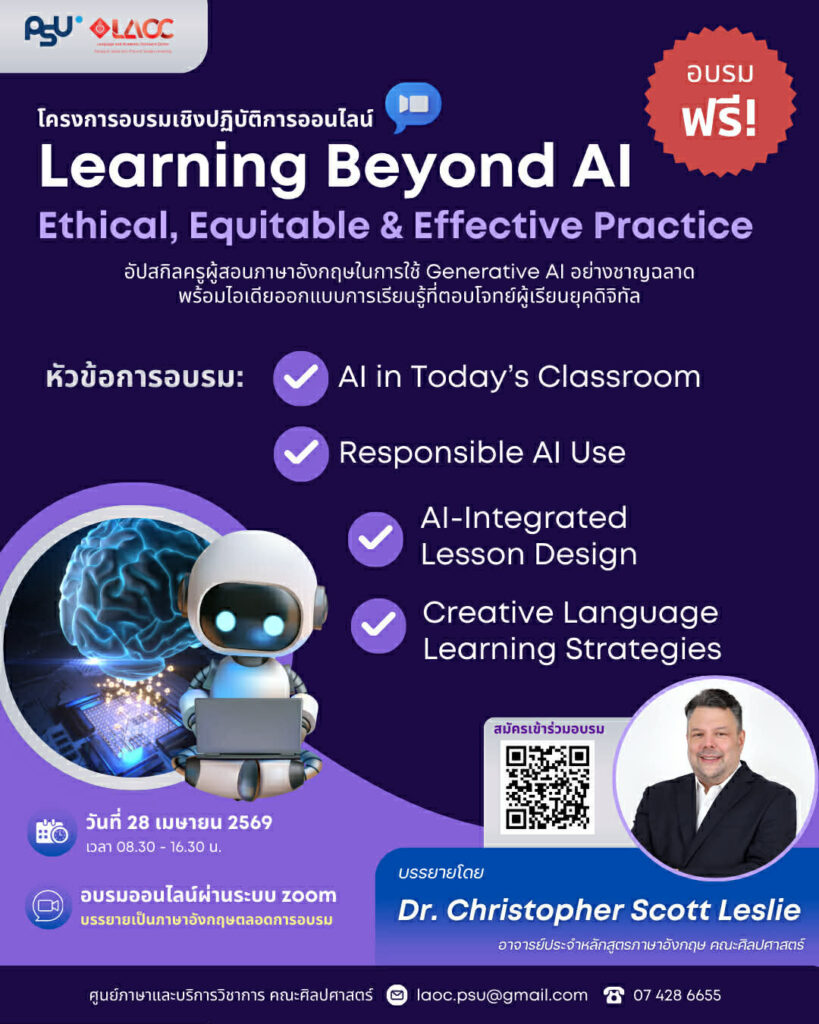
Rather than focusing on tool demonstrations, activities were organized around three pillars:
(1) assignments that reduce misuse of genAI and promote student engagement,
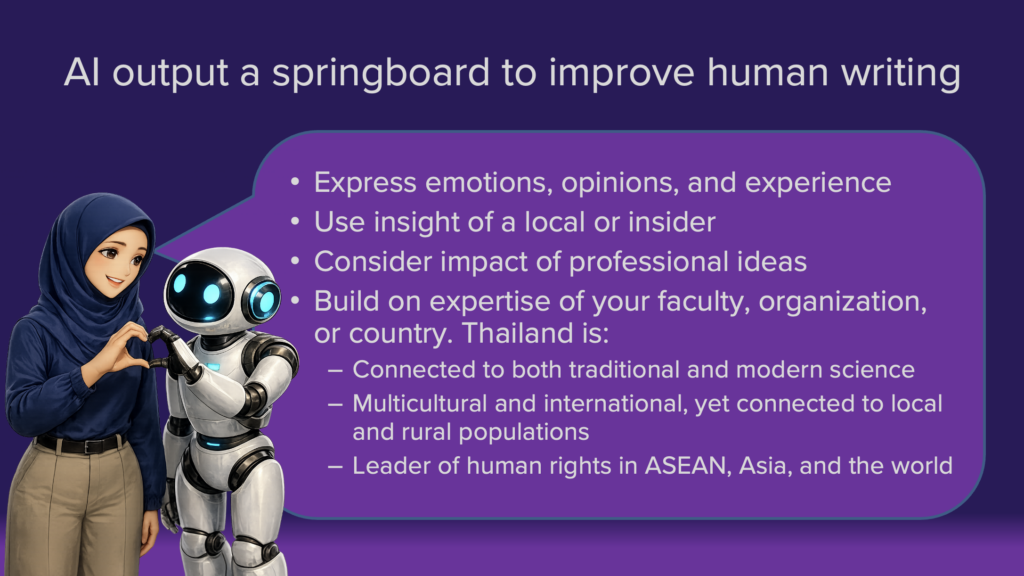
(2) approaches that teach students to critically evaluate AI-generated content and use it as a springboard for discussion and innovation, and
(3) equitable practices that support both high-performing and struggling learners without widening the digital divide.
Through guided, collaborative exploration, we explored how AI can be a tool for deeper learning rather than a replacement for genuine learning.
The strong response from participants confirmed that teachers are looking for practical, ethical ways to respond to AI — not only as a classroom challenge, but as an opportunity to rethink learning itself. We are planning on a repeat of this workshop and additional workshops for working professionals.
Sample Slides