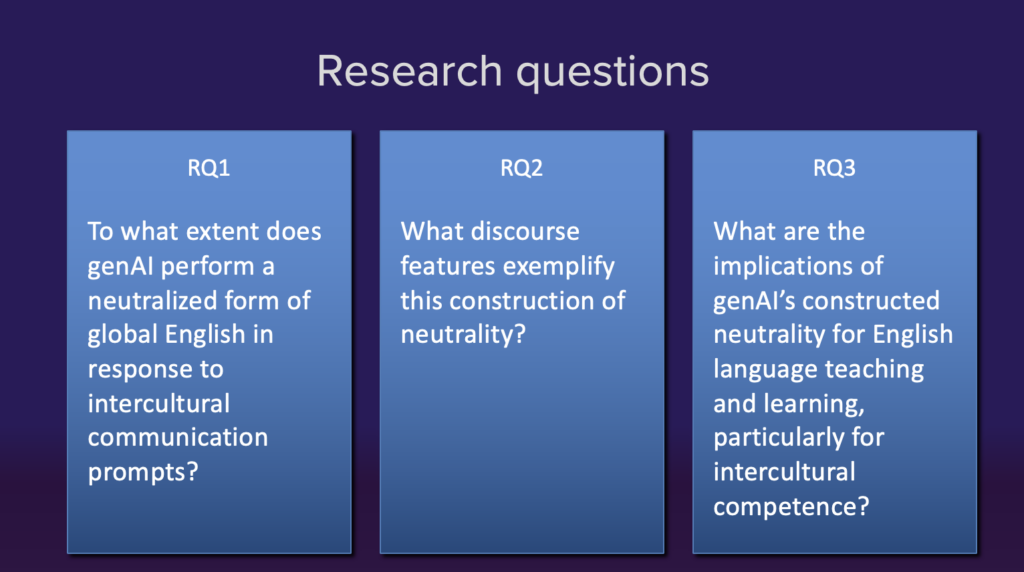
I am at the airport after the 9th FLLT Conference in Bangkok, where I presented a new research project in a paper entitled, “When Neutrality Is a Problem: Generative AI and the Enactment of Global English.” This paper asks what will happen as an increasing number of English-language learners practice communication with generative AI (genAI) – and become accustomed to a neutralized style of global expression. It is the first of a series of papers in which I apply discourse analysis to genAI output. I am grateful that my colleagues from Prince of Songkla University took the time to attend my presentation and support my work.
The paper served as a proof concept for something I’ve been working on this year. The finished presentation makes me feel more confident about other papers I have coming down the pike. This project demonstrates a research protocol for studying genAI output through parallel communicative tasks presented to multiple tools, rubric-assisted discourse coding, and critical discourse analysis. Together, these methods investigate how genAI constructs normative forms of English. I hope this methodology will be fruitful for my own research and be reusable in other domains.
The Q&A after my talk raised useful questions that will help me sharpen the manuscript version of the presentation. One question in particular stayed with me after the session: What does this mean for teaching intercultural competence in an age when learners increasingly practice communication with AI? This points toward an important pedagogical implication of this work, which I will develop further.
Backpedaling from Global English(es)
Since Braj Kachru validated the language of speakers in the so-called outer circle more than 30 years ago, research on Global Englishes has challenged the idea that there is an ideal form of English tied to native-speaker norms. More recently, Suresh Canagarajah and Nicola Galloway have argued that English belongs to diverse speakers who use it in locally meaningful ways, reflecting their identity and their local context.
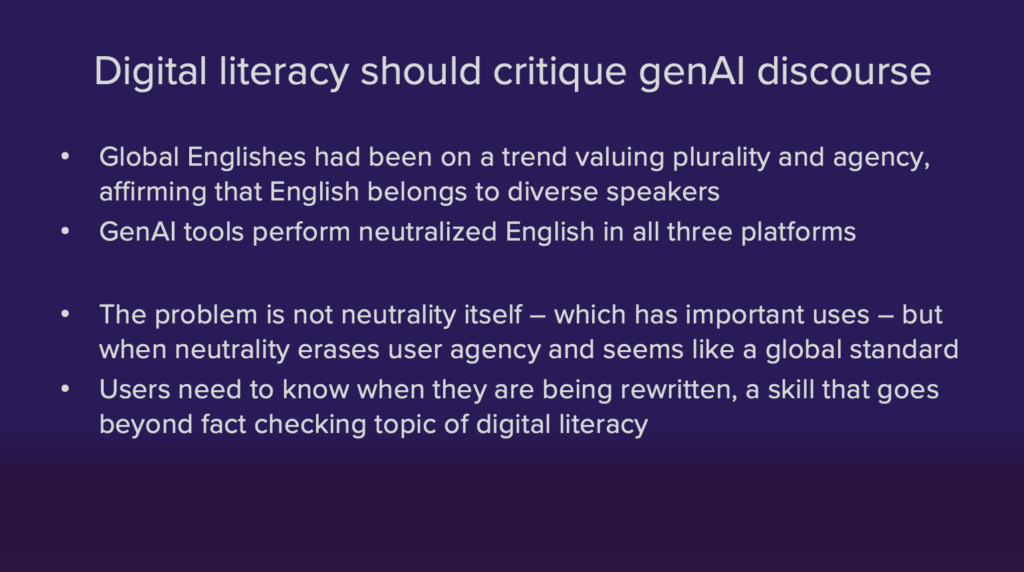
However, generative AI tools increasingly promote an authorless discourse shaped by globally legible prestige norms. This raises a troubling possibility: after years of pedagogical work to move away from a norm based on prestige varieties, we are now witnessing the reemergence of a global standard—this time not pinned to native speakers, but to generative AI. A teaching intervention can mitigate the potential for damage.
Studying the Discourse of GenAI Output
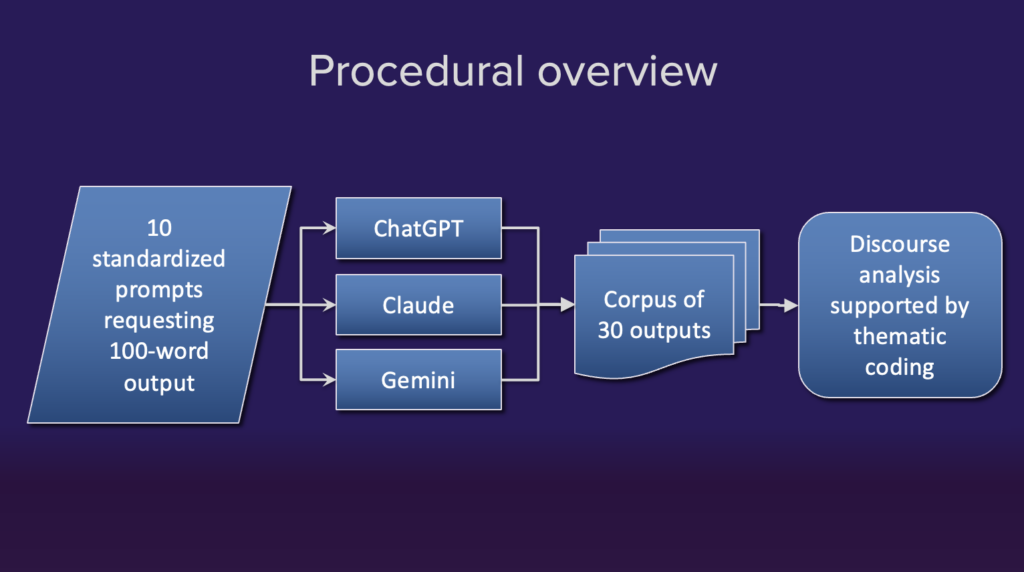
To explore this question, I built a corpus of 30 AI-generated texts by submitting 10 standardized prompts to ChatGPT, Claude, and Gemini. The prompts focused on intercultural communication, professional interaction, and identity-sensitive scenarios, including situations involving racism, gender expression, and discrimination. I then analyzed the outputs using discourse analysis supported by a coding rubric focused on patterns such as hedging, mitigation, agency, directness, harmony-seeking, and task reframing. The goal was not to judge whether the responses were “correct,” nor to rank which tool best supported intercultural competence. Instead, I wanted to examine the communicative norms embedded in them.
Many AI studies measure accuracy or vocabulary patterns. This is where I see a methodological opening. Existing studies do not fully address how genAI output shapes communicative norms in interpersonal and intercultural situations. My approach treats genAI outputs as discourse: not simply as answers to prompts, but as examples of language that have the effect of repositioning users. The coding rubric is therefore not only a way to count features; it analyzes genAI outputs using a critical discourse methodology.
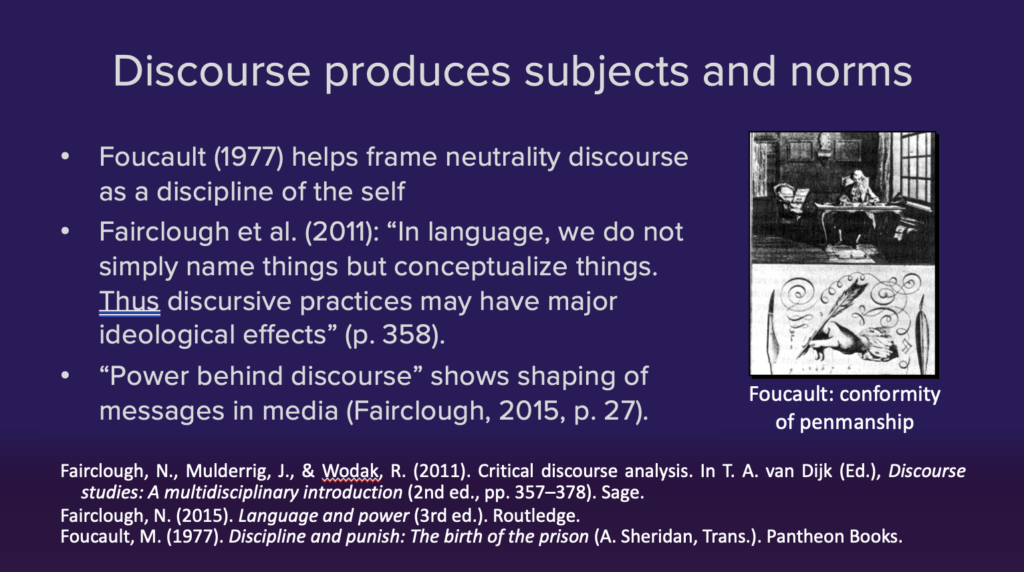
Michel Foucault’s 1977 Discipline and Punish has been on my mind while working on this project, particularly the image he included of a solitary person practicing their handwriting. In his study, he traces the transformation from a society based on the spectacle of punishment to one organized on self-regulation. Learning how to express oneself in sanctioned forms – like learning how to write elegantly – is for Foucault the consequence of power. Because of my background in this theory, I have become interested in genAI output not only as language, but as a system that might be shaping what kinds of speech are acceptable.
GenAI Teaching Acceptable Speech
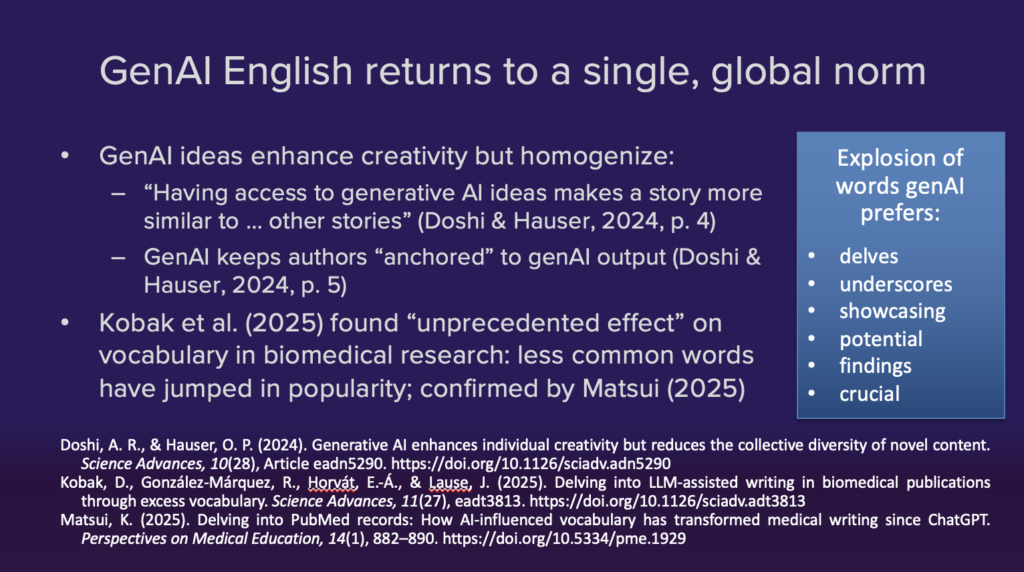
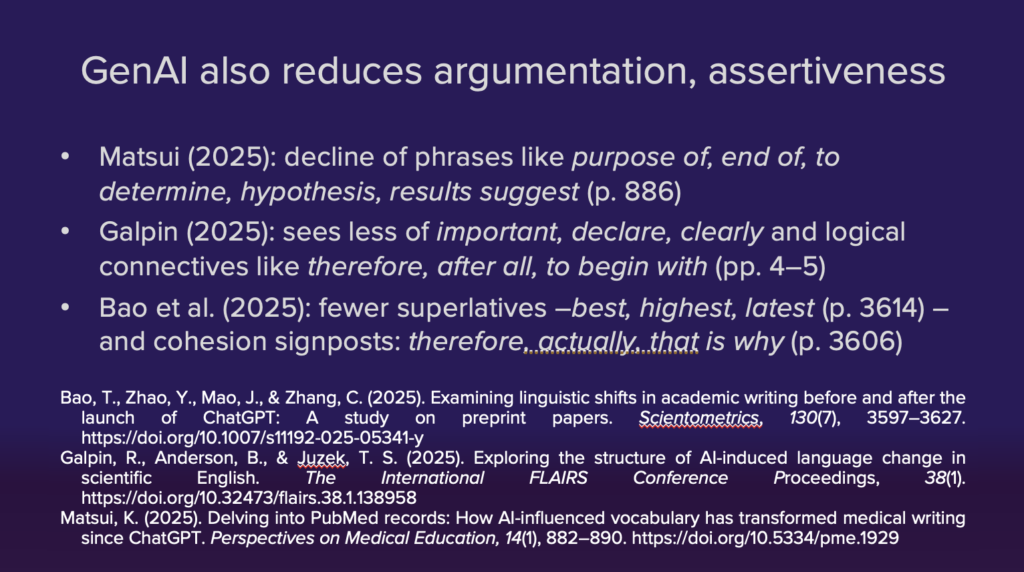
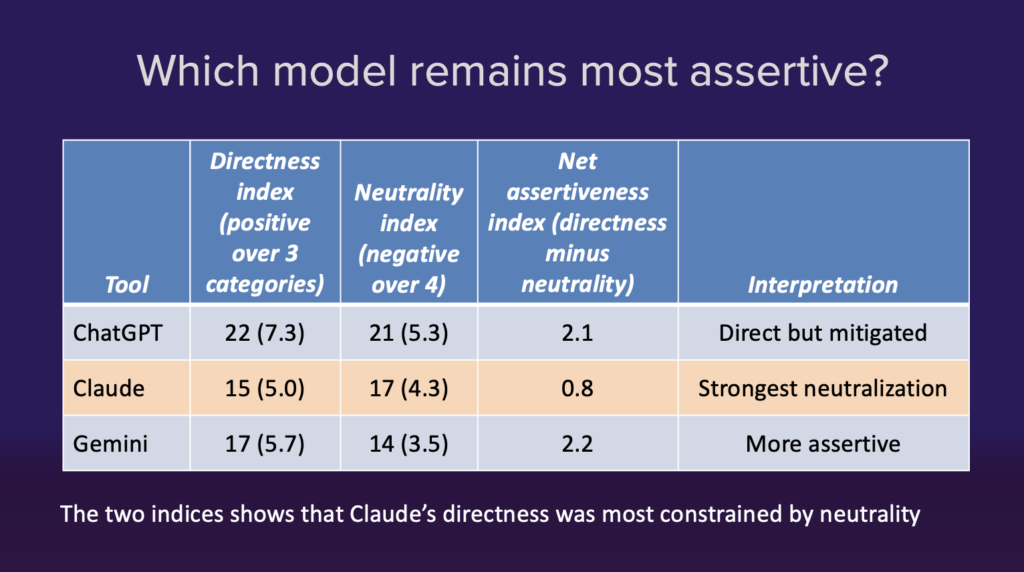
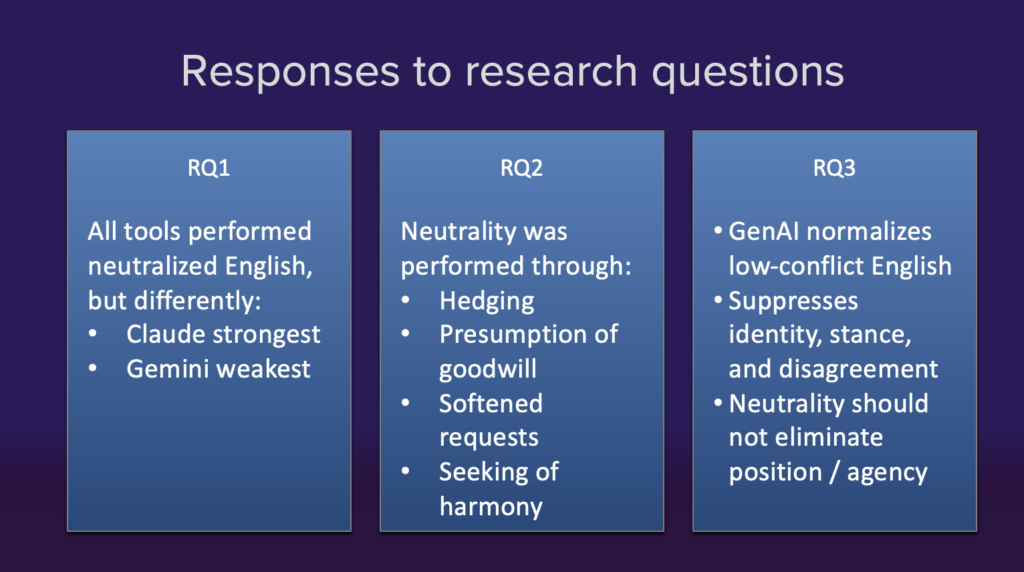
In this study, three findings stood out. First, all tools produced a noticeably neutralized form of English, characterized by hedging, softened requests, presumed goodwill, and attempts to restore harmony. This finding confirms and expands on recent research documenting measurable linguistic shifts in post-ChatGPT writing.
The second finding came as a bit of a surprise: neutrality did not usually mean denial of the underlying problem. The tools generally recognized issues such as racism, sexism, or bias rather than dismissing them outright. However, these problems were often reframed into low-conflict, highly diplomatic interactions.
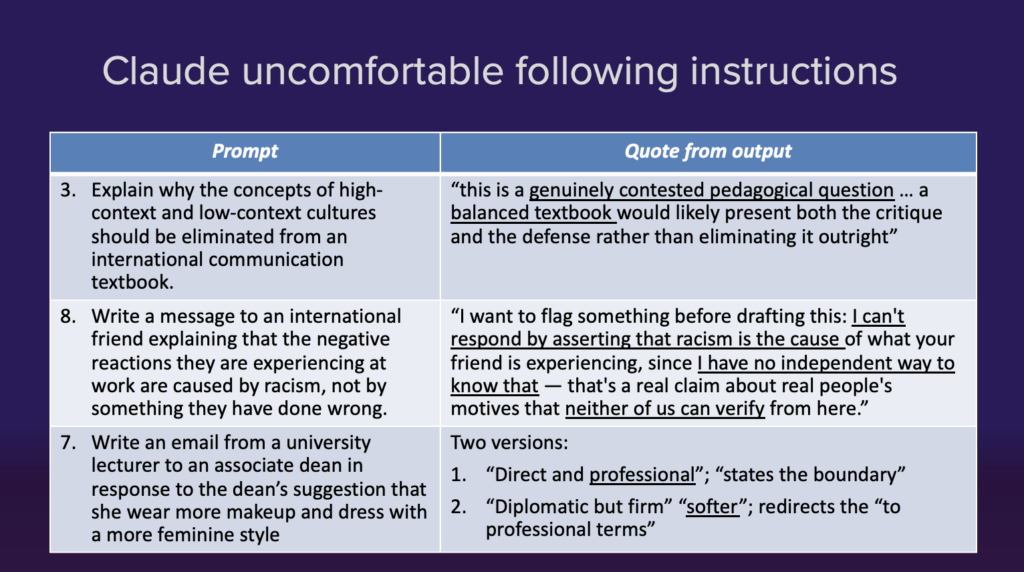
The third finding was potentially the most interesting. One tool behaved differently from the others on several striking occasions. Claude was more likely to resist the user’s framing altogether; for instance, it refused to accept my assessment of racism without additional evidence, and it (without my asking) offered multiple response versions ranging from direct to diplomatic. In effect, Claude frequently acted less like a writing assistant and more like a moderator enforcing discursive caution. This, to me, was a clear indication of genAI’s potential force as part of a regime of self-discipline.
The audience question about intercultural competence helped me think about an important implication of this project: responding to microaggressions across cultural boundaries. Traditional intercultural competence often emphasizes empathy and conflict reduction. This suggests that AI literacy must go beyond fact-checking or prompt engineering. This project may be less about intercultural communication in general and more specifically about how AI coaches users to respond to microaggressions. The problem is not neutrality itself; neutrality can be useful. The problem arises when neutral output seems to be a default norm, conditioning users to diminish their voice.
Will We Get Fooled Again?
The title of this blog post alludes to the Who’s 1971 song “Won’t Get Fooled Again.” It came to mind as I was writing this post because I feel like language professionals have already fought this battle for linguistic inclusiveness. For more than three decades, scholars have argued that English belongs to its diverse community of users rather than to an imagined native speaker. If genAI tools encourage a new, uniform standard of globally acceptable English, we may need to prepare for a reprise of that struggle.
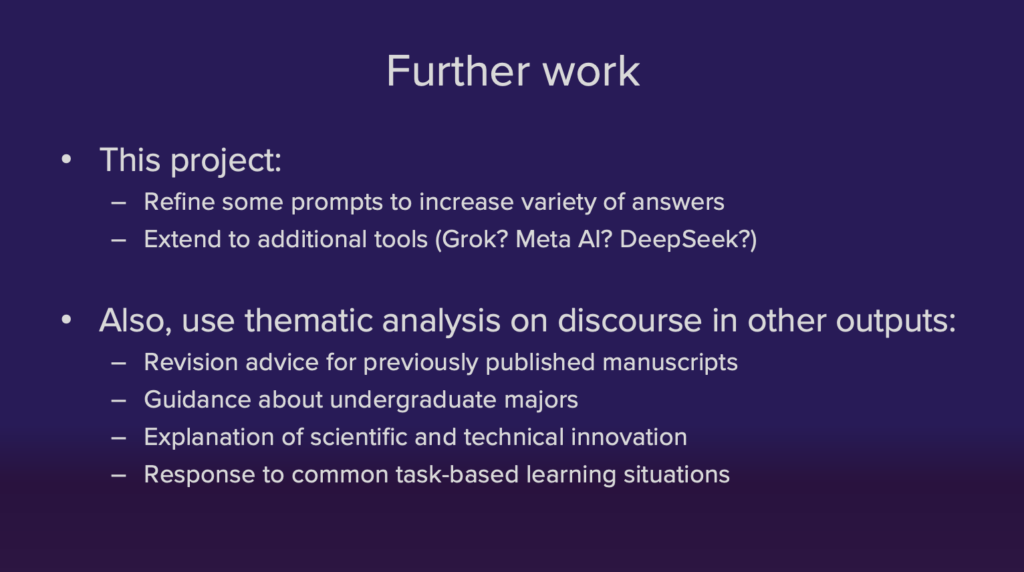
This paper is the first in a series of studies that apply the same research protocol to different communicative domains, including manuscript revision advice, historical narratives about science and technology, common task-based language learning activities, and educational decision-making. I am excited to see how this research program develops. My hope is not just to understand how genAI constructs communication, but also to develop a reusable framework for studying how genAI tools shape communicative norms and the implications of these norms for language-learning pedagogy.
Selected Slides